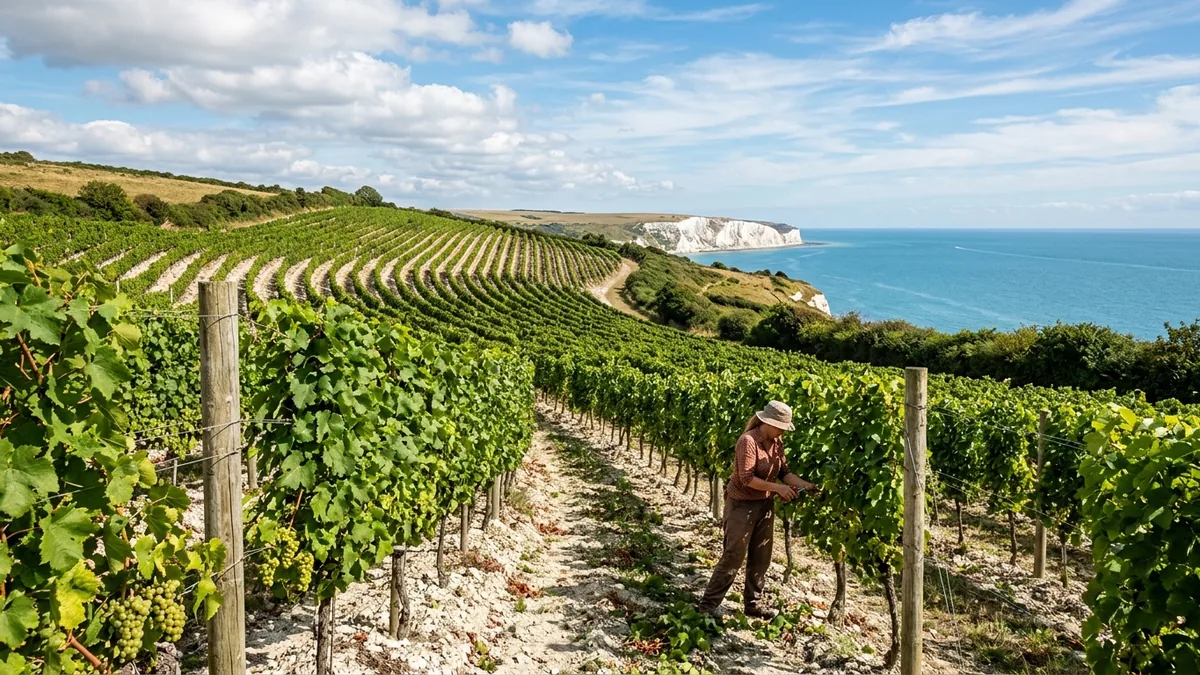
Once a national punchline, English sparkling wine now wins blind tastings against the best of France. The story of an unlikely success.
The cost question
Enjoying English wine need not be expensive, whatever the glossier coverage implies. The most rewarding version is often the least extravagant, and the instinct to spend your way to a better experience tends to get in the way of the thing itself.
English wine is moving faster than the official commentary admits, but slower than the headlines fear. The reality sits in the unglamorous middle — which is where the useful reporting lives.
Making it last
The real test of English wine is whether it survives contact with everyday life. The version worth keeping is the one that fits around work, weather and budget without ceremony — a habit rather than an event, and all the better for it.
On English wine, the loudest voices and the best-informed ones are rarely the same people.
Getting it right
The difference between a good experience of English wine and a disappointing one usually comes down to small, unglamorous decisions: timing, expectation and a willingness to value the ordinary version over the showy one. The basics, taken seriously, are most of the battle.
What is clear is that English wine will not resolve itself neatly. The interesting part is how the people involved adapt, and on that the evidence is only beginning to come in.
Continue reading with Starguo
You have read the free preview of this article. Subscribe for full access to our reporting, analysis and the complete archive.